
A Guide to Living with Multiple Sclerosis (MS)
Learn about treatments, healthy lifestyle habits, and how to manage daily symptoms in a safe and effective way.
Guide to Living with Multiple Sclerosis
Practical tips to help people with Multiple Sclerosis improve their quality of life, reduce symptoms, and support both mental and physical health through physical activity, proper nutrition, and healthy lifestyle management
Non-Pharmacological Treatments & Lifestyle
Non-Pharmacological Treatments & Lifestyle in Multiple Sclerosis (MS)
Non-pharmacological interventions are no longer considered alternative options, but rather an essential part of the comprehensive treatment plan for Multiple Sclerosis. Modern recommendations from international scientific organizations such as ECTRIMS and the National MS Society confirm that these interventions directly contribute to immune regulation, neuroprotection, and improved quality of life.
Physical Activity & Neurorehabilitation
Physical activity is one of the most evidence-supported non-pharmacological interventions, helping reduce systemic inflammation, improve functional performance, and decrease fatigue.
Aerobic Exercises
Include:
- Walking
- Cycling
- Swimming
Recommendations
- Duration: 30 minutes
- Frequency: 3 times weekly
- Intensity: Moderate
Studies have shown that aerobic exercise may reduce fatigue by up to 30%, while improving cardiovascular fitness and psychological well-being.
Resistance Exercises
Include:
- Bodyweight exercises
- Light weights
- Resistance bands
Benefits
- Improved muscle strength
- Enhanced neuromuscular adaptation
- Reduced muscle spasms
- Lower fall risk
- Better daily functional performance
Balance & Proprioception Training
These exercises aim to improve proprioception and include:
- Balance exercises
- Tai Chi
- Stability training exercises
Benefits
- Improved movement stability
- Reduced risk of falls
- Enhanced health-related quality of life
Hydrotherapy
Hydrotherapy is ideal for patients sensitive to heat, as water provides suitable resistance while maintaining body temperature stability.
Advantages
- Reduced exercise strain
- Easier movement
- Improved flexibility
- Less joint pressure
Water temperature is preferably kept below 28°C.
Evidence-Based Nutritional Strategies
Nutrition plays a central role in supporting metabolic health and reducing oxidative stress and chronic inflammation.
Mediterranean & MIND Diets
These dietary patterns are rich in:
- Omega-3 fatty acids
- Antioxidants
- Dietary fiber
- Healthy fats
Sources
- Fish
- Olive oil
- Nuts
- Leafy greens
- Fruits
Benefits
- Support nervous system health
- Improve cognitive function
- Reduce chronic inflammation
Vitamin D
Vitamin D is globally recommended as part of standard care for MS patients.
Low levels are associated with:
- Higher relapse rates
- New MRI lesions
- Increased inflammatory activity
Regular monitoring under medical supervision is recommended.
Anti-Inflammatory Approach
- Reduce processed sugars
- Limit high-sodium foods
- Avoid unhealthy fats and ultra-processed foods
These factors may contribute to increased immune activity, especially inflammatory T-cell activation.
Psychological & Cognitive Interventions
MS affects not only physical health but also cognitive functions and emotional well-being, requiring specialized interventions for mental support.
Cognitive Behavioral Therapy (CBT)
- Reducing disease-related fatigue
- Treating anxiety and depression
- Improving psychological adaptation
CBT focuses on modifying thought and behavior patterns linked to the “fatigue cycle.”
Computerized Cognitive Training
Includes digital programs designed to improve:
- Processing speed
- Attention & concentration
- Short-term memory
These are among the most common cognitive impairments in MS patients.
Mind-Body Exercises
Examples:
- Yoga
- Pilates
- Breathing & relaxation exercises
Benefits
- Better emotional balance
- Reduced stress
- Improved flexibility & balance
- Reduced stress-related symptom flare-ups
Lifestyle Factors
Certain lifestyle modifications can significantly influence disease progression and long-term outcomes.
Smoking Cessation
Smoking is considered one of the most important modifiable risk factors and is associated with:
- Faster disease progression
- Increased inflammatory activity
- Transition from relapsing-remitting MS to secondary progressive MS
Heat Management
Some patients experience:
Uhthoff’s Phenomenon
A temporary worsening of symptoms caused by increased body temperature.
Helpful Strategies
- Cooling vests
- Cold showers
- Avoiding prolonged heat exposure
- Maintaining hydration
Improving Sleep Quality
Managing sleep disorders is essential, especially:
- Insomnia
- Sleep apnea
Because they directly affect:
- Fatigue levels
- Concentration
- Cognitive performance
This content is intended for educational and awareness purposes only and should not replace consultation with a qualified healthcare professional.
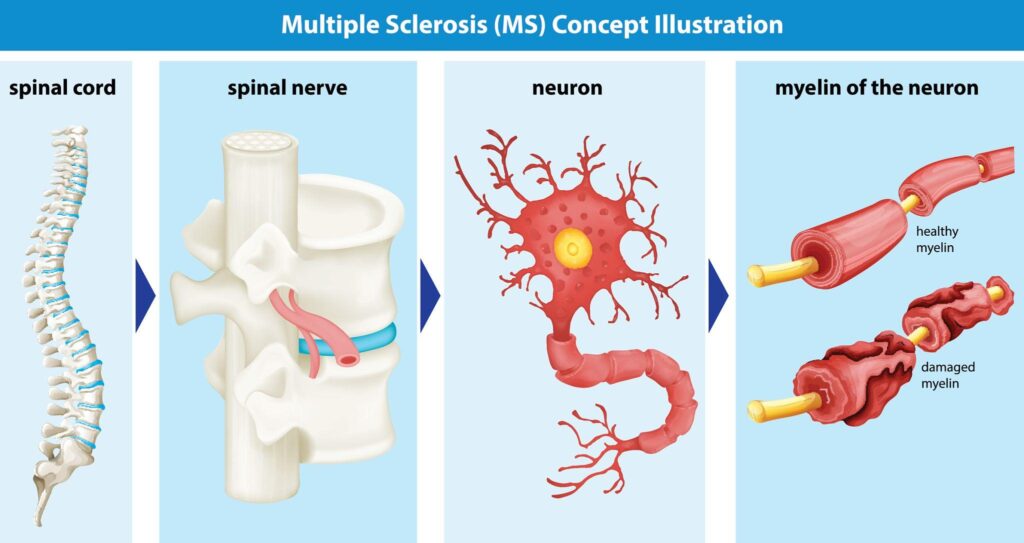
Pharmacological Treatment for Multiple Sclerosis
Acute Relapse Management
Glucocorticoids
Mechanism of Action
They suppress lymphocyte activation, reduce inflammatory cytokine production, and limit immune cell migration into the central nervous system.
Therapeutic Effect
- Significantly reduce inflammatory activity visible on MRI scans
- Reduce active lesions
- Accelerate recovery during acute relapses
Limitations
- Not recommended for long-term use
- May cause diabetes mellitus
- High blood pressure
- Osteoporosis
Injectable Therapies (First-Line Treatment)
Glatiramer Acetate
Mechanism of Action
A synthetic compound that redirects the immune system from a pro-inflammatory state to an anti-inflammatory state.
Clinical Effect
- Reduces annual relapse rates by up to 29%
- Promotes remyelination
- Reduces permanent nerve damage
Safety
- Injection site reactions
- Rare flushing or chest pain
- Relatively safe during pregnancy
Interferon β-1a & β-1b
Mechanism of Action
Enhance anti-inflammatory cytokine production and reduce immune cell migration into the nervous system.
Clinical Effect
- Reduce relapse rates by approximately 18%–33%
Safety
- Flu-like symptoms
- Skin reactions
- Liver or thyroid dysfunction
- Possible mood-related side effects
Oral Therapies
Fingolimod
Mechanism of Action
Prevents T cells from leaving lymph nodes, reducing their access to the brain.
Clinical Effect
- Reduces relapse rates by 54%
- Reduces disability progression by 32%
Safety
- Cardiac monitoring required at first dose
- Bradycardia
- Macular edema
- Liver abnormalities
Dimethyl Fumarate
Mechanism of Action
Acts through anti-inflammatory pathways and provides neuroprotection.
Clinical Effect
- Reduces relapse rates by 53%
- Reduces disability progression by 38%
Safety
- Flushing
- Nausea, diarrhea, and gastrointestinal disturbances
Teriflunomide
Mechanism of Action
Inhibits pyrimidine synthesis, reducing the proliferation of active immune cells.
Clinical Effect
- Reduces relapse rates by 31%
Safety
- Potential liver toxicity
- Hair loss
- Contraindicated during pregnancy
Intravenous Therapies & Clinical Monitoring
Natalizumab
Mechanism of Action
A monoclonal antibody that prevents immune cells from crossing the blood-brain barrier.
Clinical Effect
- Reduces relapse rates by 68%
- Reduces disability progression by 42%
Safety
- Risk of serious brain infection (PML)
- Higher risk in JC virus-positive patients
- Risk increases with prior immunosuppressive therapy
Clinical Monitoring Criteria
- Monitoring relapse frequency and new attacks
- Evaluating disability progression using the EDSS scale
- MRI follow-up to detect new lesions
- Monitoring brain atrophy and brain volume loss
This content is for educational and awareness purposes only and should not replace consultation with a qualified healthcare professional.
Medical Follow-Up & What to Do When Symptoms Appear
A quick guide for managing common Multiple Sclerosis symptoms and maintaining regular medical follow-up.
Severe Fatigue
Reduce Heat: Use cooling methods or take a cold shower.
Rest: Take short breaks in a quiet place.
Muscle Stiffness
Stretching Exercises: Stretch muscles slowly and steadily.
Change Position: Try to keep your body moving regularly.
Difficulty Walking
Use Assistive Devices: Use a walking cane when needed.
Proper Footwear: Wear stable, non-slip shoes.
Brain Fog
Focus: Concentrate on one task at a time.
Reminders: Use a notebook or organization app.
Stress & Anxiety
Breathing Exercises: Practice controlled breathing to reduce stress.
Relaxation: Try sitting in a calm and quiet environment.
Medical Follow-Up
Regular Checkups: Visit your doctor regularly.
Symptom Tracking: Record any new symptoms or changes.
When Should You Seek Immediate Medical Help?
⚠️ Sudden Vision Loss
Contact your doctor immediately if you experience severe or sudden changes in vision.
⚠️ Severe Weakness
Seek medical help if sudden weakness prevents movement or walking.
⚠️ Difficulty Breathing
Any sudden breathing problem requires urgent medical attention.